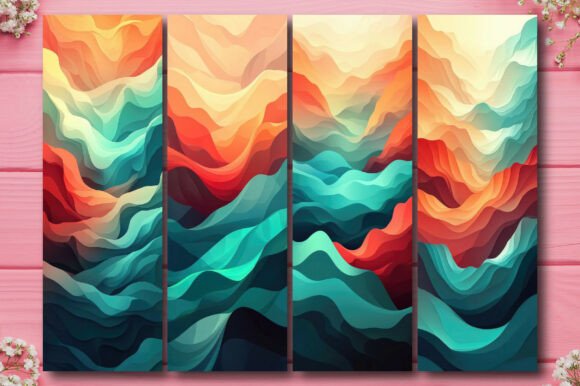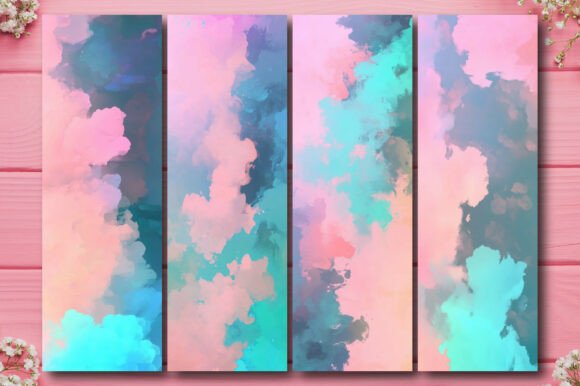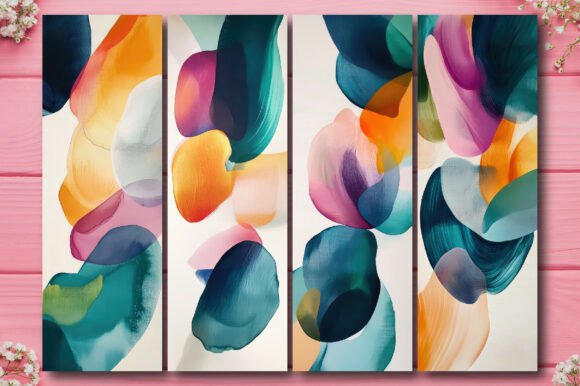
Abstract Fluid Brushstroke Bookmark PNG
First Impression: A Whisper of Movement, Not a Shout
Opening Abstract Fluid Brushstroke Bookmark PNG feels like watching ink bleed softly across wet paper—there’s no hard edge, no rigid geometry. It’s a single, confident gesture: a sweeping, asymmetrical curve with subtle tapering, gentle swelling, and organic irregularity in its contour. The shape reads as both bold and quiet—minimalist but full of implied motion. As an embroidery designer who’s stitched everything from intricate monograms to dense floral motifs, I immediately sense this isn’t a design that wants to dominate. It wants to breathe alongside the fabric—not fight it.
Where It Lives Best: Thoughtful Embroidery, Not Busy Backdrops
I recently tested Abstract Fluid Brushstroke Bookmark PNG on a natural linen tea towel for a small-batch boutique launch. Paired with soft ecru thread and a light tear-away stabilizer, it stitched cleanly at 3.8" wide—just right for the towel’s lower corner. Customers responded strongly: “It feels handmade, not printed,” one wrote. “Like someone paused mid-thought and captured it.” That’s the sweet spot. This design shines on pieces where subtlety signals intention—aprons for ceramic studios, pillow covers for minimalist nurseries, baby onesies (stitched low on the chest), or even the inside hem of a reversible tote bag. It works beautifully as a standalone embroidered patch on denim jackets or canvas backpacks—no text needed, no clutter required.
Real-World Stitching Notes: What Holds Up, What Needs Care
What performs well:
- Custom apparel: On medium-weight cotton sweatshirts and structured tote bags, the fluid line translates clearly. Satin stitch along the outer edge gives it presence without stiffness; fill stitch in the broader swell stays open and breathable—no puckering.
- Baby embroidery: Its lack of fine interior detail makes it ideal for delicate fabrics like interlock or brushed cotton. No tiny loops or fragile stems to snag during washing.
- Holiday & gift embroidery: On neutral-toned kitchen towels or wool-blend blankets, it reads as modern heirloom—not seasonal, but timeless. Perfect for wedding guest favors or teacher appreciation gifts where “handmade” matters more than “festive.”
- Etsy seller & craft business use: As a digital embroidery file, it scales cleanly. I resized it down to 2.2" for a cap visor test (with proper cutaway stabilizer) and up to 5.5" for a pillow cover—both held visual integrity.
Where to pause and plan:
- Small hoop sizes: Below 3", the taper and subtle weight shift start to compress. If you’re stitching on a child’s cap or narrow wristband, confirm the smallest clean version before digitizing.
- Textured or stretchy fabric: On terry cloth towels or lightweight knits, the fluid edge can blur slightly if stabilizer isn’t matched precisely. Use a medium-weight cutaway for knits; a light fusible + tear-away combo for terrycloth.
- Dark fabric: Because it’s a single-shape motif, contrast is everything. Test thread colors thoughtfully—matte charcoal on navy reads richer than bright white, which can look stark or pixelated at distance.
- Curved surfaces: Caps and curved apron pockets demand careful hooping. The longest axis should follow the curve’s natural arc—not fight it—or the brushstroke will visually warp.
How It Shapes Perception—Beyond Just Stitches
Embroidery isn’t just decoration—it’s a trust signal. When a customer sees Abstract Fluid Brushstroke Bookmark PNG on a handmade product, they read intention, restraint, and confidence. It doesn’t scream “look at me,” but it lingers. That affects real metrics: higher perceived value on Etsy listings, stronger brand consistency for boutiques leaning into quiet luxury, and better giftability (people remember how something *felt*, not just how it looked). For apparel decorators, it offers a refreshing alternative to script fonts or cliché florals—ideal for creatives, educators, or wellness brands wanting refined, non-literal identity.
Practical Designer Checks Before You Stitch
Before committing to production—or listing your finished item—run these quick checks:
- Test on scrap fabric using your exact thread, stabilizer, and machine settings—not just on screen.
- Review stitch density: Does the fill area breathe? Overly dense fills trap moisture and stiffen natural fibers.
- Confirm hoop size compatibility with your most common projects—especially if you sell embroidered patches or baby items.
- Inspect corners and taper points at actual stitch-out size. Zoom in on your embroidery software preview to catch any unintended jumps or thinning.
- Test black-and-white mockups—this design relies on shape and rhythm, not color. If it reads clearly in grayscale, you’re golden.
- Compare light/dark fabric backgrounds in printable mockups. Does it retain its grace on charcoal linen? On oatmeal canvas?
- Verify stabilizer choice matches both fabric drape and design weight—lightweight designs need less support, but too little causes distortion.
- Check licensing before selling finished products or bundling with other digital embroidery files. Crafts category assets vary widely in commercial use rights.
A Design That Earns Its Place
Abstract Fluid Brushstroke Bookmark PNG isn’t flashy—but it’s thoughtful. It respects the material it lands on, the hand that stitches it, and the person who receives it. In a market saturated with overworked motifs and algorithm-friendly clutter, this design stands out by stepping back. It’s the kind of embroidery asset that grows more valuable the longer it lives on a garment, towel, or keepsake—it softens with wear, gains character, and never shouts for attention. For designers, Etsy sellers, and craft businesses building intentional, tactile brands, it’s not just another machine embroidery design. It’s a quiet collaborator.