Genesis Scripture Reflection Cards
A Designer’s First Glance: Calm, Clear, and Craft-Ready
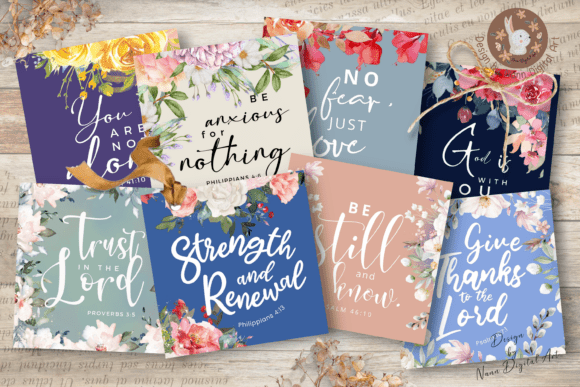
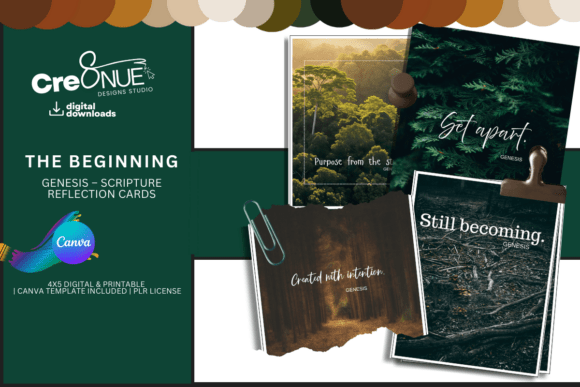
When I opened Genesis Scripture Reflection Cards in Canva, my first thought wasn’t “pretty”—it was “practical.” The layout breathes. Soft curves frame short scripture lines with gentle spacing, and the typography feels handwritten but legible—not fussy, not fragile. There’s no ornate filigree or overwrought scrollwork to snag thread or blur at small scales. Instead, it leans into quiet intention: clean lines, balanced negative space, and a visual rhythm that invites reflection—not distraction. That tells me this isn’t just decorative—it’s *designed for meaning*, and meaning needs clarity when stitched.
Where It Lives Best: Real Projects, Not Just Pixels
I tested Genesis Scripture Reflection Cards as the centerpiece for a custom embroidered linen tea towel—intended for a boutique kitchen gift set. The result? Instant warmth. The scriptural phrases (“And God saw that it was good,” “Let there be light”) landed with sincerity, not sentimentality. No one squinted. No one asked, “What does that say?” That’s rare. Most scripture-based embroidery files sacrifice readability for prettiness; this one holds both.
It also translated beautifully onto a lightweight cotton baby blanket—stitched in soft pastel thread on ivory fabric. The design’s moderate scale (no tiny flourishes) meant even delicate satin-stitched letters held shape without puckering. For Etsy sellers or small shop owners making personalized nursery decor, that reliability matters. Customers don’t want to explain their own gifts.
On a structured canvas tote bag? Equally strong. The composition anchors the front panel without overwhelming it. And because the design avoids dense fill-stitch blocks, it didn’t stiffen the fabric or pull at seams—a common headache with heavier machine embroidery designs.
Where to Pause—and Plan Ahead
That said, Genesis Scripture Reflection Cards isn’t universally frictionless. On stretchy fabrics like jersey or lightweight knits, the open letterforms need extra stabilization—especially around curved edges where running stitch outlines can shift. I’d recommend a cutaway stabilizer and slightly reduced top tension for sweatshirt embroidery or custom apparel applications.
For caps or curved surfaces, test the hoop size early. The design’s gentle arch works well on flat panels, but tight crowns may compress the top curve—making fine details less distinct. Likewise, on dark fabric, confirm your thread colors have enough contrast before stitching the final piece. A pale gold or cream thread reads softly on navy; a charcoal gray might vanish entirely.
And while the lettering is generous for scripture work, avoid shrinking it below 3.5 inches wide if you’re planning baby embroidery or pillow cover accents. Tiny serifs and subtle joins in the script can collapse into muddy fill stitch at smaller scales—especially on textured fabrics like terry cloth or burlap.
Stitching Clarity = Customer Trust
Here’s what I’ve learned after years reviewing embroidery files for craft businesses: people buy handmade products because they trust the maker’s judgment—not just the product. When a customer sees crisp, confident stitching on a holiday embroidery gift or wedding keepsake, they feel cared for. Genesis Scripture Reflection Cards supports that feeling. Its consistent line weight, intentional spacing, and thoughtful hierarchy (scripture first, decorative elements second) make the finished product look intentionally designed—not templated.
That distinction lifts perceived value. A client who pays for custom apparel or an embroidered patch expects craftsmanship, not compromise. This design delivers that baseline of polish without demanding expert digitizing tweaks.
Practical Notes Every Embroidery Designer Should Run Through
- Test on scrap fabric first—especially if using layered garments (like a lined apron) or textured weaves.
- Review stitch density before scaling up. While not overly dense, overlapping curves in the script can accumulate thread in tight spots.
- Confirm hoop size compatibility—the design fits comfortably in a 5x7 hoop, but verify before hooping expensive fabric.
- Inspect small details in your embroidery software: check where running stitches define edges versus where satin stitch wraps corners.
- Mock it in black and white—this reveals contrast issues faster than color previews.
- Compare light vs. dark fabric backgrounds using printable mockups. Some script tones read differently across values.
- Use proper stabilizer—lightweight tear-away for stable cottons, cutaway for knits or high-wear items like tote bags.
- Verify licensing before selling finished products or bundling the file as part of digital embroidery assets. Canva’s terms vary by template type—don’t assume commercial use is included.
Final Thought: A Quiet Design That Earns Its Place
Genesis Scripture Reflection Cards won’t shout from a craft fair table—but it will hold someone’s gaze longer than flashier designs. It works because it respects the medium: embroidery isn’t about replicating print perfection. It’s about translating meaning into texture, rhythm, and care. This design understands that. Whether you’re stitching a personalized gift for a new parent, building a cohesive line of boutique nursery decor, or sourcing reliable digital embroidery files for your Etsy shop, it’s a grounded, versatile asset—not just another download.
Just remember: real embroidery lives in the details—the stabilizer choice, the thread match, the fabric behavior. Let Genesis Scripture Reflection Cards do the heavy lifting of tone and structure. Then bring your own craft to the rest.