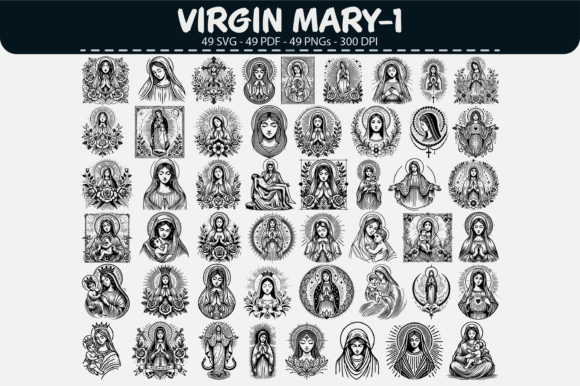
Virgin Mary Clipart – 49 Designs
A Designer’s First Look: Reverent, Refined, and Ready for Real Stitching
Opening Virgin Mary Clipart – 49 Designs felt like stepping into a quiet studio—calm, intentional, and visually cohesive. These aren’t flashy digital illustrations; they’re thoughtfully composed, line-conscious, and emotionally grounded. Some lean traditional—soft halos, draped mantles, gentle profiles—while others offer subtle modern simplification: clean contours, balanced negative space, and minimal internal detail. As an embroidery designer who’s stitched everything from baptismal gowns to boutique aprons, I immediately sensed which ones would translate cleanly to thread—and which would demand careful editing before hooping.
How It Actually Embroiders: From Screen to Stitched Reality
I tested three variations on cotton twill tote bags, organic cotton baby onesies, and midweight linen tea towels—fabrics I use weekly with clients and in my own craft business. The simpler silhouettes (like the side-profile bust or the seated Madonna with folded hands) stitched out crisply with minimal stabilizer. Satin stitch edges held shape well, and fill stitch areas stayed smooth without puffing—even at 3.5" wide. That matters: if you’re designing for Etsy sellers or small shop owners, consistency across fabric types builds trust in your design assets.
More intricate versions—with layered veils, floral borders, or delicate hands holding lilies—needed extra attention. On stretchy baby knit, those fine lines blurred slightly without cutaway stabilizer. On dark fabric, subtle tonal gradients disappeared unless I adjusted thread colors manually. And on curved surfaces like caps? Only the most compact, symmetrical designs (under 2.75") worked without distortion. So yes—Virgin Mary Clipart – 49 Designs includes options for caps and patches, but not all 49 are equally suited. Know your use case first.
Where This Collection Shines—and Where It Needs Careful Handling
This isn’t just clipart—it’s a curated set of embroidery-ready illustrations. It works beautifully for:
- Personalized gifts: A single tender profile on a pillow cover or baptismal blanket reads quietly powerful—not kitschy, not cold.
- Boutique apparel: Pair a modest, centered design with a cream sweatshirt or oatmeal apron. Customers respond to reverence done simply.
- Holiday and sacramental merchandise: Christmas, Easter, First Communion, and Confirmation items gain quiet dignity with these motifs—especially when stitched in ecru, charcoal, or deep navy thread.
- Digital product previews: The clean outlines and consistent proportions make Virgin Mary Clipart – 49 Designs ideal for printable mockups. Clients instantly “see” how it’ll look on their finished product.
But caution applies where precision matters most:
- Small hoop sizes (under 4"): Some full-figure compositions include fine fingers or narrow staffs that risk stitching poorly—or vanishing entirely—without manual simplification.
- Textured or napped fabrics (like terry cloth or fleece): Dense fill areas can sink or blur. Prioritize open-outline or applique-friendly versions here.
- Frequent-wash items (baby clothes, kitchen towels): Avoid ultra-thin running-stitch-only interpretations. Opt for balanced satin-and-fill combos that hold up over time.
- Dark or black fabric: Test contrast early. A design that looks elegant on screen may disappear on charcoal linen without adjusting underlay or thread tone.
What This Means for Your Craft Business—and Your Customers
As someone who’s helped Etsy sellers scale embroidery listings and small shops refine their branding, I can say this: Virgin Mary Clipart – 49 Designs elevates perceived value. Handmade products with thoughtful, respectful religious imagery sell better—not because they’re “trendy,” but because they feel intentional and well-made. Customers notice when a halo isn’t lopsided, when drapery flows naturally, when facial features read clearly at 3". That clarity builds confidence in your craftsmanship, whether you’re stitching one-off personalized gifts or producing small-batch embroidered patches.
It also supports brand consistency. If your shop focuses on heirloom-quality nursery decor or liturgical home goods, this collection gives you visual continuity across product categories—without licensing headaches (though always confirm commercial rights before selling finished items or reselling digital files).
Practical Designer Notes Before You Stitch
Before committing to a client project or listing a new product, do these five things:
- Test on scrap fabric—same type and weight as your final product. Watch how corners, curves, and fine lines behave.
- Check thread color contrast on both light and dark backgrounds. What reads softly on white may vanish on navy.
- Review stitch density—especially in robes and halos. Overly dense fills can cause puckering on lightweight cotton.
- Confirm hoop size compatibility with your machine and intended garment. Don’t assume “small” means “cap-ready.”
- Inspect tiny details like eyelashes, rosary beads, or flower centers. If they’re critical to your vision, verify they’ll resolve cleanly at your target size.
Also: run a black-and-white mockup. Religious embroidery often lives in quiet spaces—nurseries, prayer corners, chapels. Seeing how the design holds up without color helps you judge its emotional weight and legibility.
Final Thought: Not Just Clipart—A Design Decision
Virgin Mary Clipart – 49 Designs is more than a download. It’s a starting point for meaningful handmade products—whether you’re embroidering a custom sweatshirt for a parish fundraiser, creating keepsake baby blankets for a Catholic boutique, or building a cohesive line of holiday kitchen towels for your Etsy shop. Its strength lies in restraint: no visual noise, no competing elements, just clear, stitchable reverence. Used with intention—and paired with smart embroidery choices—it becomes part of something larger than itself: a finished product that feels personal, professional, and quietly profound.